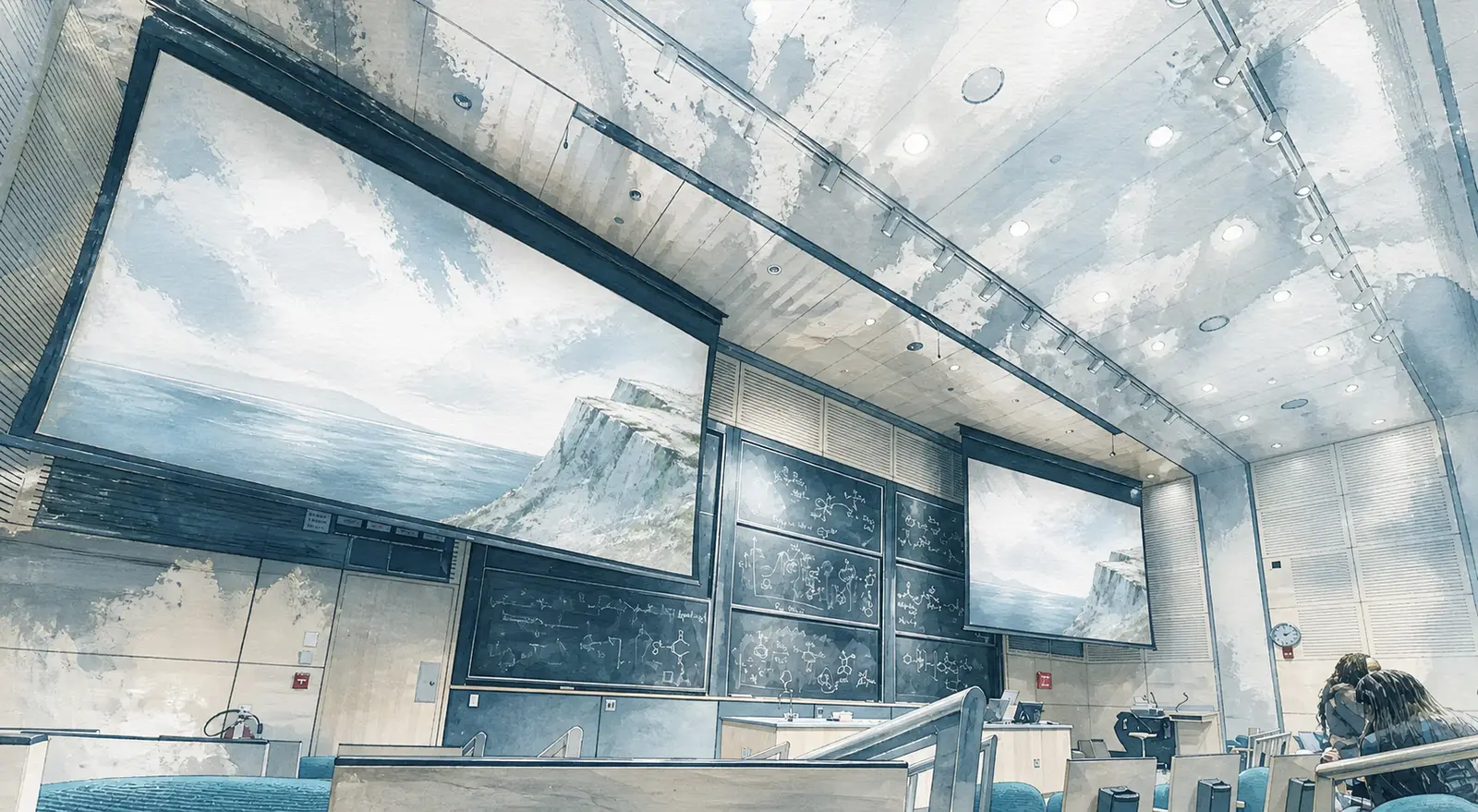
Princeton's new chemistry building has the brightness of a modern university: glass, pale wood, and air without the weight of history. I take an inconspicuous seat in the large stepped auditorium, drape my coat over the chair, and feel like someone quietly pretending to belong.
Students arrive in hoodies and trainers, carrying coffee and talking as naturally as if they were entering their own living room. These are among the brightest young people in America, yet nothing announces it. I envy less their intelligence than their ease in not yet knowing what lies ahead.
The lecture turns to conformity and the Asch experiments. The speaker asks who would keep giving the correct answer when a group is wrong. Several students raise their hands. I do not. At forty-seven, the question feels different. At twenty, you have not always known the isolation of disagreeing in a room where everyone else nods, or the distance between being right and being right without effect.
For the students, these ideas are knowledge to understand. For me, they are memories, scars, and nights spent turning something over until it slowly made sense.
I remember Melbourne more than twenty years ago, sitting in another lecture theatre and struggling to keep up with language, logic, and concepts I lacked the experience to understand. I worked hard, but without firm ground beneath the effort.
Now every word lands. Not because I have become cleverer, but because I have lived through the material. Theory has become part of the body, like markings in bone. Life sometimes gives an unexpected gift: not something new, but new eyes with which to see the old. After decades of detours, the lesson becomes a mirror, and what appears in it is yourself.